In the sacred path of Pushtimarg, Darshan is not merely “seeing” the Divine—it is a deeply spiritual exchange where the devotee beholds the Lord, and the Lord, in His infinite grace, beholds the devotee.
The Darshan of Shree Nathji is the moment when the soul reconnects with its eternal source. It is believed that even a single, heartfelt glance at Shree Nathji can purify lifetimes of karma and awaken divine love (bhakti) within the heart.
The Living Presence of Shree Nathji
Shree Nathji, a divine form of Lord Krishna manifesting as the lifter of Govardhan Hill, is worshipped not as an idol, but as a living, loving child of the house. In temples, especially in Shrinathji Temple Nathdwara, He is served throughout the day with affection, care, and devotion.
Each Darshan reveals a different mood (bhav) of the Lord—just like witnessing the changing expressions of a beloved family member.
The Eight Daily Darshans (Ashta Yam Seva)
In the Pushtimarg tradition established by Shree Vallabhacharya, Shree Nathji is worshipped through eight daily Darshans, each reflecting a specific time of day and divine pastime:
- Mangala Darshan – Early morning awakening of the Lord
- Shringar Darshan – Adornment and beautification
- Gwal Darshan – Departure for cow herding
- Rajbhog Darshan – Midday royal meal offering
- Utthapan Darshan – Awakening from afternoon rest
- Bhog Darshan – Light meal offering
- Sandhya Aarti Darshan – Evening worship and lamp offering
- Shayan Darshan – Putting the Lord to rest
Each Darshan is unique, with different attire, decorations, music, and offerings—creating a dynamic, living relationship between the devotee and the Divine.
1. Mangala Darshan (Auspicious Awakening)
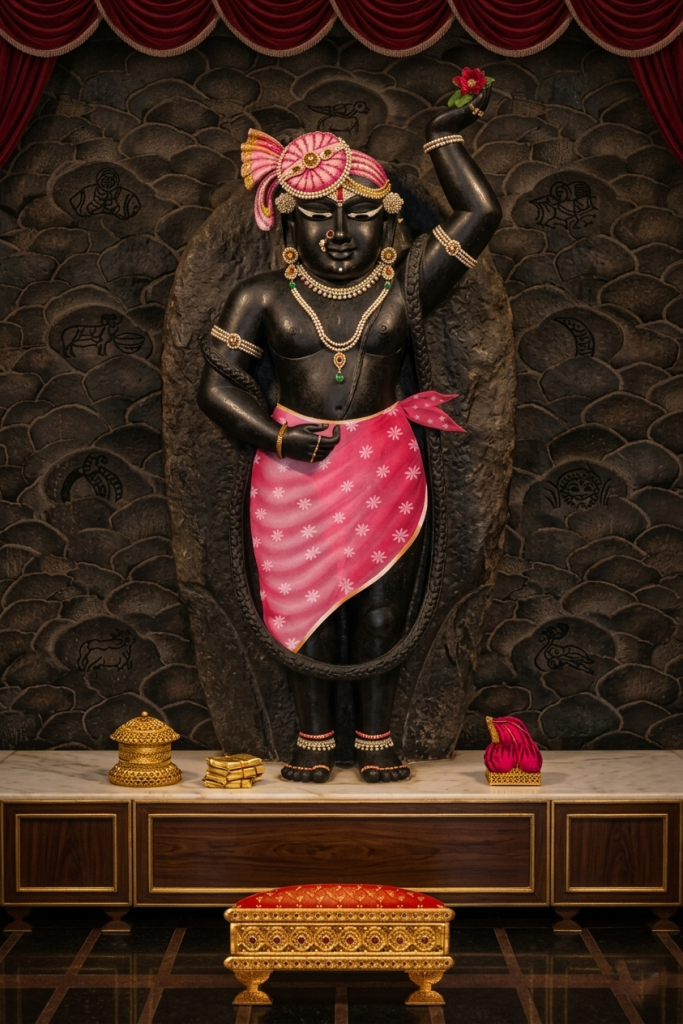
Mangala Darshan is the first and most sacred darshan of Shree Nathji in the early hours of the morning, typically before sunrise. The word “Mangala” means auspicious, and this darshan marks the divine awakening of the Lord.
Soft lamp light, minimal adornment, and sacred silence create a deeply intimate atmosphere. Devotees believe this darshan blesses the entire day with peace, clarity, and divine grace.
2. Shringar Darshan (Adornment of the Divine)
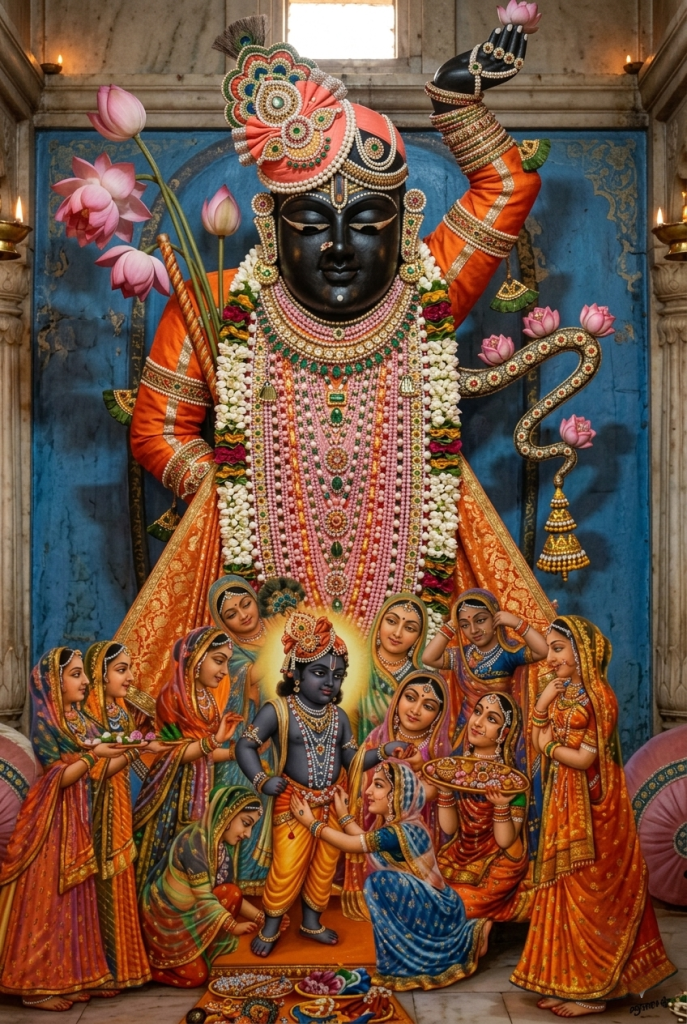
In Shringar Darshan, the Lord is beautifully adorned with rich garments, jewellery, and fragrant flowers.
This darshan represents the joy of lovingly preparing the Lord. It reflects the devotee’s bhav o feelings — offering the very best to the Divine with devotion and care.
3. Gwal Darshan (Krishna the Cowherd)
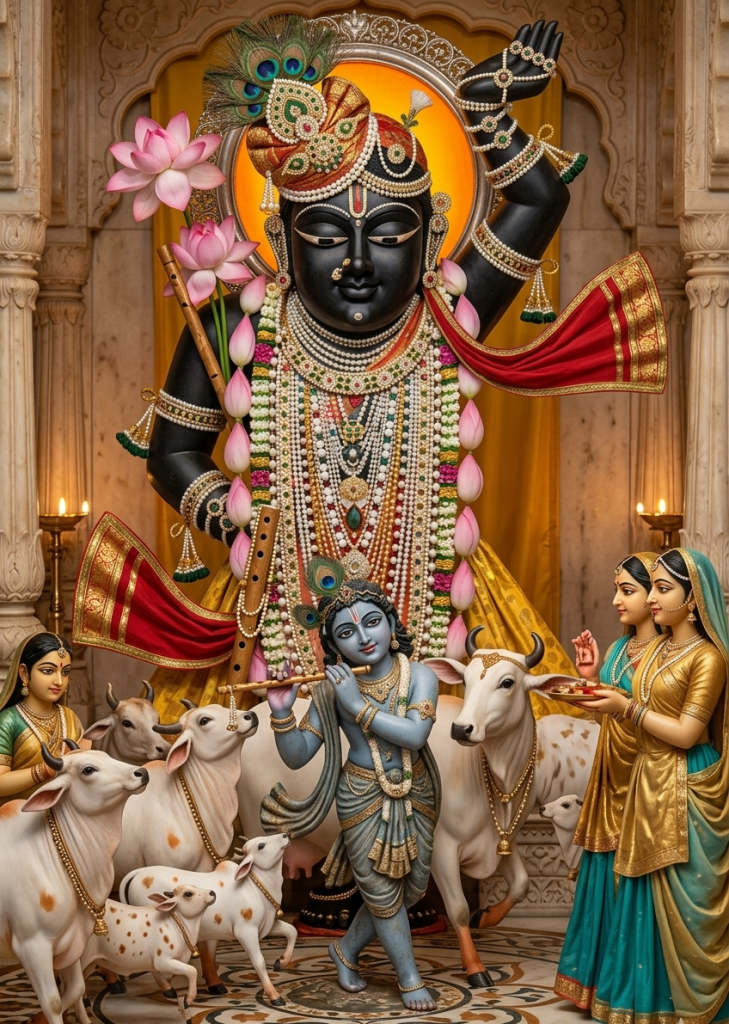
Gwal Darshan shows Shree Nathji as a playful cowherd boy, ready to go out with the cows.
The simplicity of this darshan reminds devotees of Krishna’s innocent, ग्रामीण (village) life, encouraging humility and connection to simplicity.
4. Rajbhog Darshan (Royal Offering)
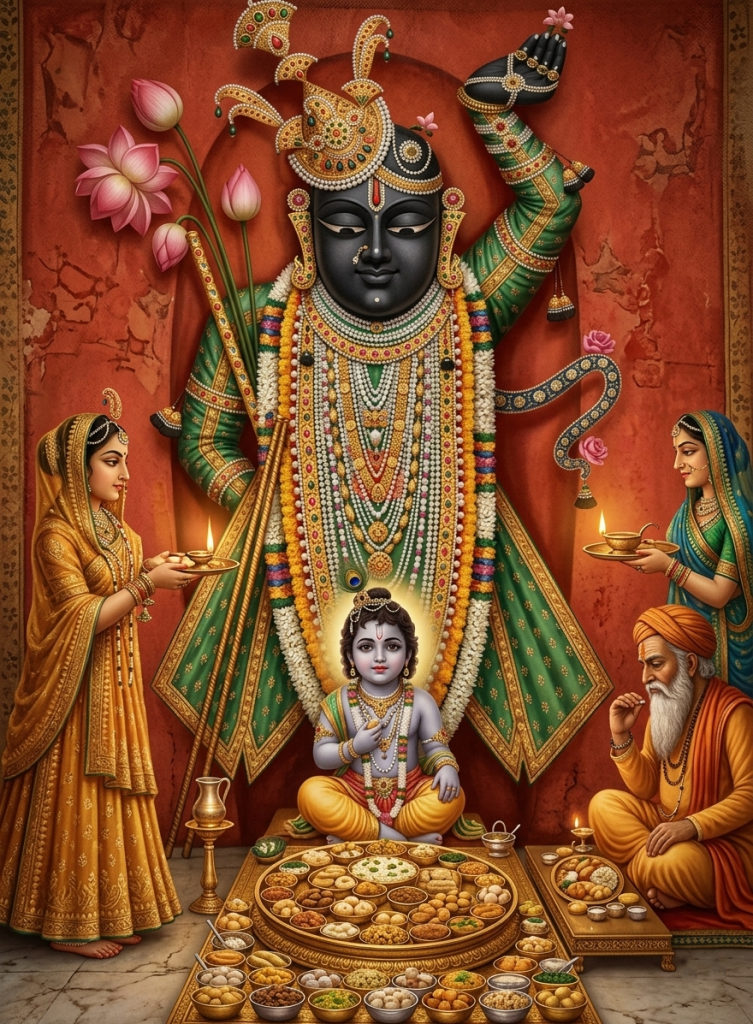
Rajbhog is the grand midday darshan, where an elaborate meal is offered to the Lord.
The temple is vibrant and majestic, symbolizing abundance and divine kingship. It teaches that all nourishment comes from the Divine, and everything we receive is His blessing.
5. Utthapan Darshan (Awakening from Rest)
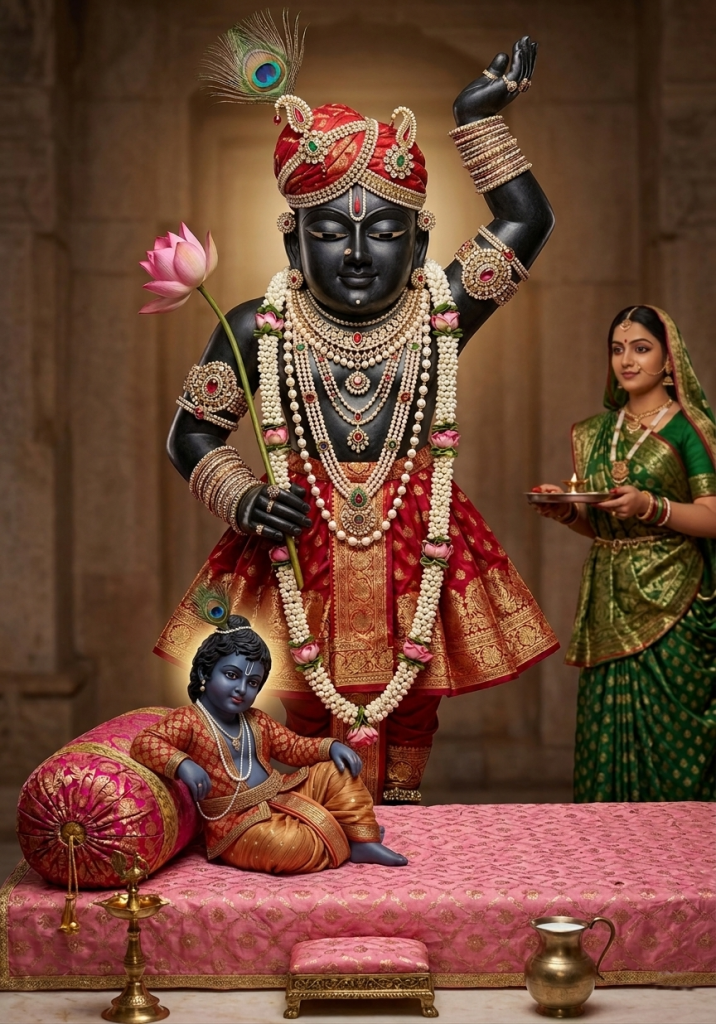
After His midday rest, Shree Nathji awakens again during Utthapan Darshan.
This darshan symbolizes renewal and continuation of divine play (लीला), reminding devotees to reawaken spiritually even in the midst of daily life.
6. Bhog Darshan (Afternoon Offering)
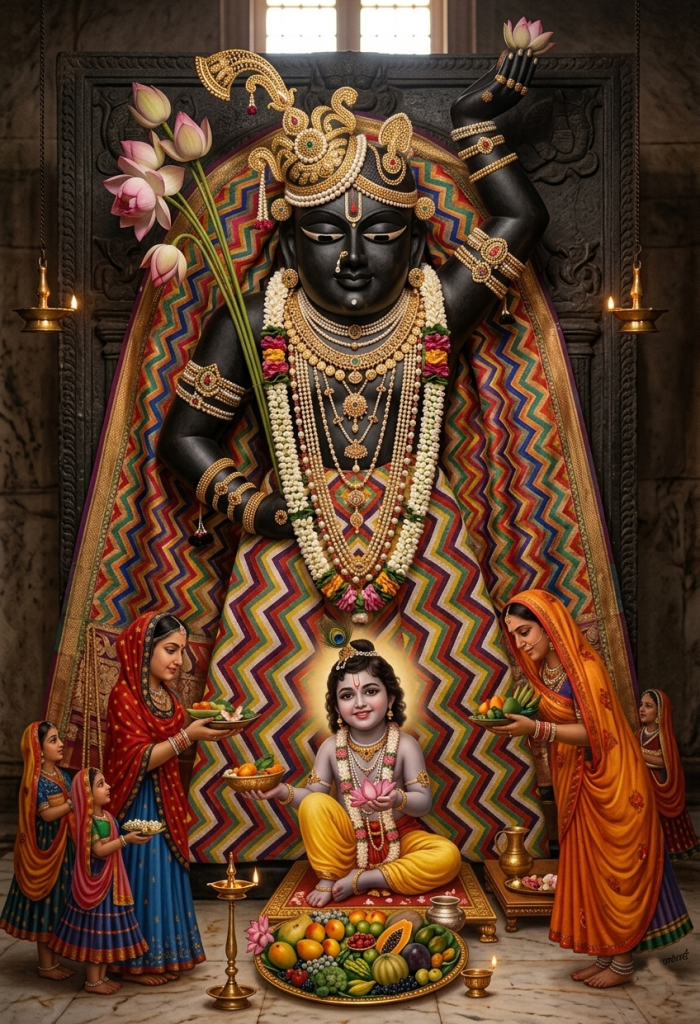
A lighter offering is presented during Bhog Darshan.
The atmosphere is peaceful and balanced, reflecting gratitude and mindful offering. It reminds devotees to remain thankful for life’s daily sustenance.
7. Sandhya Aarti Darshan (Evening Worship)
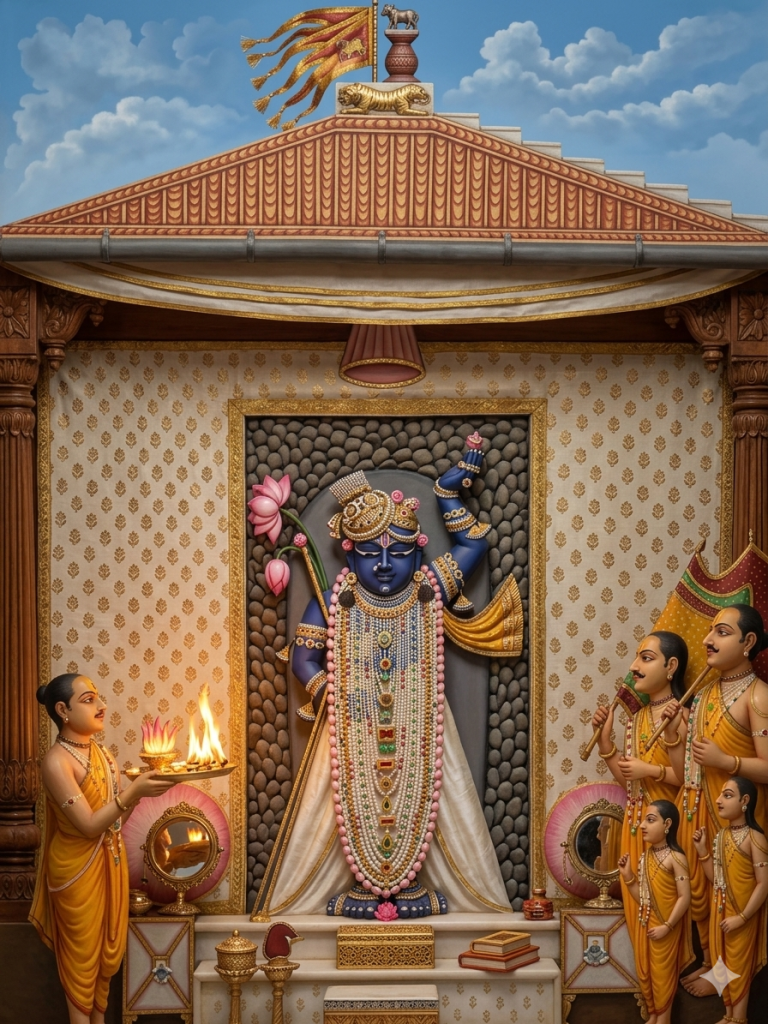
As the day comes to a close, Sandhya Aarti fills the temple with light, music, and devotion.
The glowing lamps symbolize the removal of darkness and ignorance, while भक्तों gather in collective devotion and gratitude.
Shayan Darshan (Divine Rest)
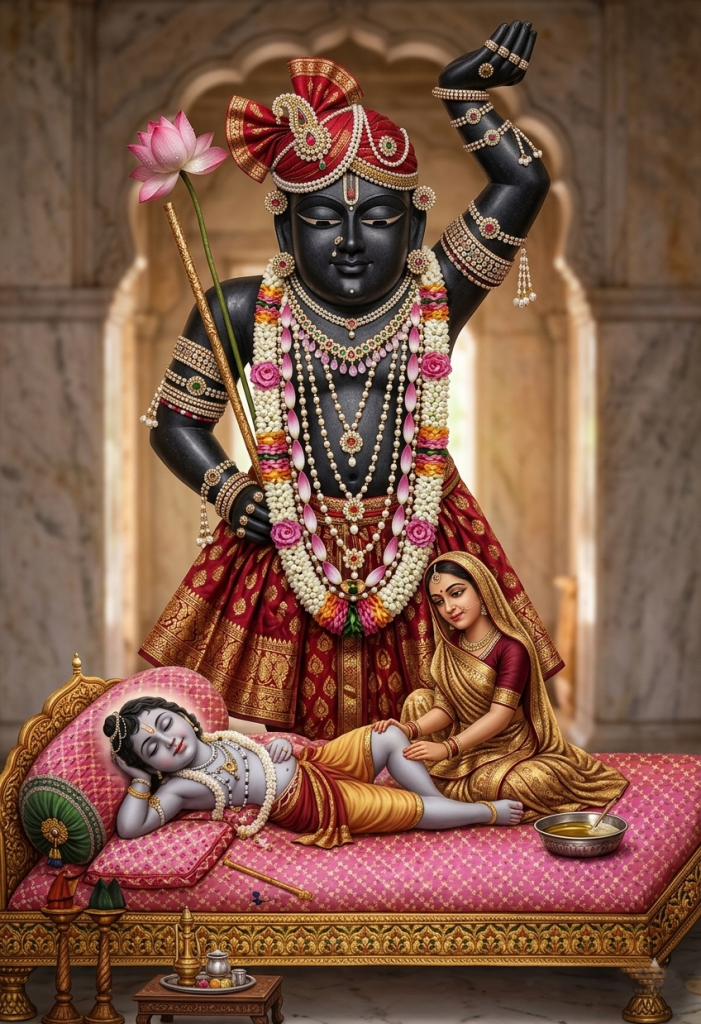
Shayan Darshan is the final darshan of the day, where Shree Nathji is prepared for rest.
Dressed in soft night attire, the Lord retires peacefully. This darshan teaches complete surrender, allowing devotees to end their day in divine remembrance and trust.
Spiritual Significance of Darshan
1. Divine Connection
Darshan is a direct connection with Shree Nathji. It is not ritualistic—it is relational. The devotee experiences the Lord’s presence, compassion, and grace.
2. Grace Over Effort (Pushti)
In Pushtimarg, liberation is attained not by strict austerities, but by divine grace (pushti). Darshan becomes the gateway through which this grace flows effortlessly.
3. Awakening of Bhakti
Regular Darshan deepens love for the Divine. The heart softens, ego dissolves, and devotion naturally blossoms.
4. Inner Peace and Purification
Even a brief Darshan calms the mind, removes negativity, and brings spiritual clarity and emotional balance.
5. Participation in Divine Leela
Through Darshan, devotees feel they are part of Shree Krishna’s eternal divine play (leela), experiencing His childhood, love, and divine pastimes.
Darshan as a Way of Life
Darshan is not limited to temple visits. True Darshan happens when the heart constantly remembers Shree Nathji with love and surrender. Whether through seva, kirtan, or silent remembrance, the devotee carries the presence of the Lord within.
A Sacred Invitation
At Shree Nath Dham, Darshan is an invitation—to pause, to connect, and to experience the divine presence of Shree Nathji in a deeply personal way.
“One moment of true Darshan can transform a lifetime.”
Come with faith. Leave with grace.
Pandit Sachin Singh